

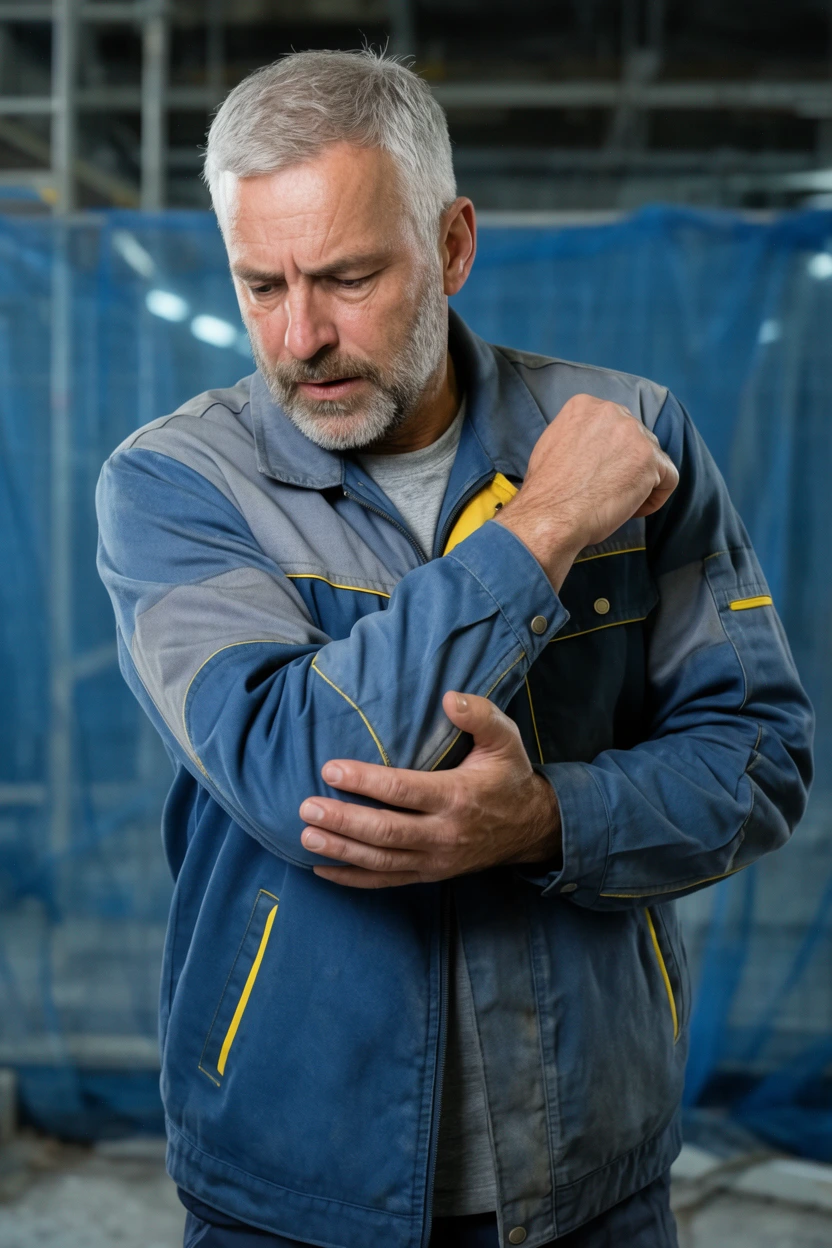
Elbow tendinitis: Epicondylitis & Epitrochleitis - Restoring balance to the arm's muscle chains
Often grouped under the term "elbow tendinitis", epicondylitis (outer side / Tennis Elbow) and epitrochleitis (inner side / Golf Elbow) manifest as sharp pain on the bony prominences of the elbow, making simple actions like gripping a computer mouse or shaking hands painful.
Why is osteopathy the key to lasting recovery?
The elbow directly suffers from compensations from a stiff wrist or a locked shoulder. Osteopathy breaks this vicious circle by rebalancing the entire upper limb to eliminate excessive tension that constantly pulls on the elbow's bony attachments.
The arm release protocol at the practice:
Mechanical adjustment of the elbow (Radial head):
A slight misalignment of the radial head induces permanent asymmetric tension on the muscles, directly fueling inflammation.
Release of key joints (Wrist and Shoulder):
If the wrist lacks flexibility during your professional movements, the elbow muscles work twice as hard to compensate.
Myofascial release and cervical decompression:
The osteopath relaxes the forearm muscle bellies. Additionally, careful examination of the lower cervical vertebrae (C5 to C7) is performed, as this is where the nerves innervating these tendons originate.
Don't let elbow pain become chronic to the point of losing grip strength.
The sooner the mechanical imbalance is corrected by your osteopath, the faster and more effective the tendon recovery.
Elbow pain and shooting pain in the forearm are sometimes accompanied by other joint tensions or blockages.
To understand how osteopathy can help you with all these imbalances, discover our complete overview of musculoskeletal disorders (MSDs) treated at the practice.